AI Lab Report Grader vs Alternatives: What Actually Works for Science Courses
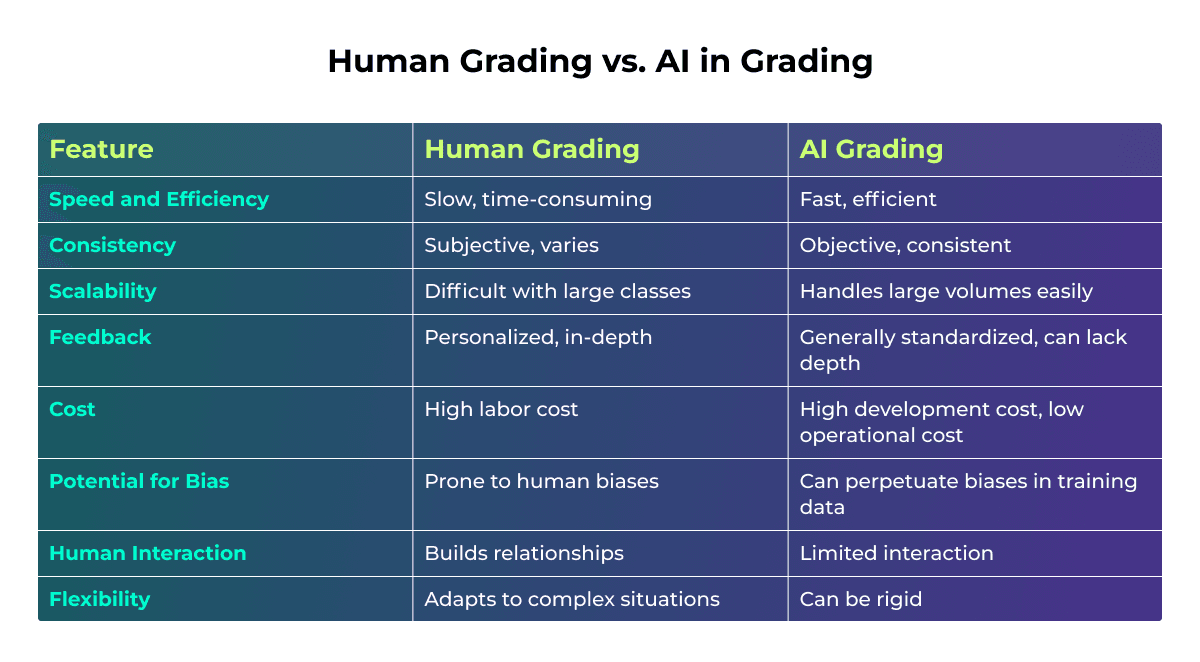
AI Lab Report Grader vs Alternatives: What Actually Works for Science Courses
Searching for the best AI lab report grader usually leads to tools built for essays or generic short answers. For science instructors, that mismatch creates inconsistent scoring and weak feedback. This comparison focuses on what matters for lab assessment quality.
Evaluation Criteria for Lab Report Grading
When comparing options, prioritize:
- Section-aware scoring (method, data, analysis, conclusion)
- Numeric/unit checking support
- Evidence-based feedback instead of generic comments
- Clear teacher override controls
- Repeatable rubric calibration across sections and TAs
Option 1: Generic Essay Graders
Where they help: language and clarity feedback.
Where they fail: weak handling of calculations, scientific notation, data interpretation, and experimental reasoning.
Option 2: LMS-Only Manual Rubrics
Where they help: centralized gradebook and workflow consistency.
Where they fail: still high manual effort for large classes and limited automation of technical checks.
Option 3: STEM-Focused AI Lab Report Grading
Where it helps: section-level rubric alignment, faster review loops, stronger consistency across graders, and better support for science-specific feedback quality.
For classes that combine report writing with equation-heavy responses, pair a lab workflow with dedicated AI chemistry grading and AI math grading paths.
Practical Recommendation
If your goal is speed alone, a generic grader may look acceptable at first. If your goal is reliable science assessment, use a dedicated AI lab report grader with teacher-in-the-loop controls and criterion-level scoring.
Migration Checklist
- Start with one assignment and one rubric.
- Calibrate with 10-20 samples.
- Lock category definitions for the term.
- Track regrade rates and comment usefulness.
- Expand to all report-heavy sections.
Bottom Line
The best alternative is the one that protects grading quality while reducing time cost. For most science teams, that means moving from generic grading to a purpose-built AI lab report grading workflow and documenting your rubric standards.